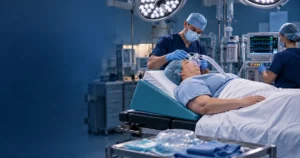
If your hospital is in the market for a video laryngoscope, this buying guide covers everything your procurement team needs to evaluate before signing a contract. Over 68% of U.S. hospitals now include video laryngoscopy in their standard intubation protocols. A 2024 cluster randomized trial published in JAMA, covering 8,429 procedures, found that video laryngoscopy reduced intubation failure rates by a factor of 15 compared to direct laryngoscopy. These numbers are not theoretical projections. They represent the measurable difference between a device that shows the airway on a screen and one that relies on a clinician’s direct line of sight.
This video laryngoscope buying guide walks through the clinical, financial, and operational criteria that should drive the hospital purchasing decision.
Why U.S. hospitals are standardizing on video laryngoscopy
The shift from direct to video laryngoscopy is no longer optional in most clinical settings. The American Society of Anesthesiologists (ASA) 2022 Practice Guidelines for Management of the Difficult Airway explicitly list video laryngoscopy among the recommended tools for both anticipated and unanticipated difficult airways. Meta-analyses of randomized controlled trials cited in those guidelines reported improved glottic views, higher first attempt success rates, and fewer intubation maneuvers when video laryngoscopy was used compared to direct laryngoscopy.
The 2024 Cleveland Clinic JAMA trial went further. It showed that hyperangulated video laryngoscopy reduced the number of patients needing more than one intubation attempt from 7.6% to 1.7% across both elective and emergent cases. These findings are particularly relevant for procurement because repeated intubation attempts are associated with higher complication rates, longer ICU stays, and increased costs per patient episode.
For hospitals participating in quality reporting programs or those tracking adverse event metrics, video laryngoscopy is now a risk mitigation tool as much as a clinical one.
What to evaluate in a video laryngoscope before your hospital buys one
Selecting a video laryngoscope is not a straightforward equipment order. Any hospital buying guide for this category must address clinical, financial, operational, and regulatory considerations simultaneously. The decision typically passes through a Value Analysis Committee (VAC), and procurement teams need to prepare documentation that satisfies both clinical leads and financial officers.
Here is a framework for structuring that evaluation:
Blade configuration: Reusable, disposable, or hybrid
This is the first fork in the decision tree. Reusable blades reduce per-procedure costs over high-volume use but require validated sterilization workflows. Disposable (single use) blades eliminate cross-contamination risk entirely but carry a higher per-unit cost. Hybrid systems allow clinicians to swap between reusable and disposable blades on the same monitor platform, offering flexibility across departments.
The disposable segment is the fastest-growing category in the U.S. market, expanding at roughly 9.55% CAGR according to SNS Insider data published in March 2026. Infection control mandates, particularly in ICU and emergency department settings, are the primary driver.
For a detailed breakdown of the clinical tradeoffs between these configurations, see our guide on Reusable vs Disposable vs Hybrid Video Laryngoscopes.
Monitor and imaging quality
Not all video laryngoscopes deliver the same image quality. The factors that matter clinically include screen resolution, anti fog performance, LED illumination brightness, and field of view angle. A monitor with poor resolution or a camera prone to fogging during procedures can negate the primary advantage of video laryngoscopy: clear visualization of the glottic opening.
Procurement teams should request demonstration units for clinical evaluation and ask anesthesiology leads to assess image clarity under real operating conditions, not just in a showroom. See our analysis of why imaging quality directly affects intubation outcomes for the clinical evidence behind this point.
Additional monitor features worth evaluating include battery life (critical for portable and prehospital use), screen size, recording and playback capability for training, and connectivity to hospital EMR systems.
Blade geometry: Macintosh vs hyperangulated
Macintosh profile blades mirror the shape most clinicians learned during residency and offer the advantage of both direct and indirect (video-assisted) visualization. Hyperangulated blades provide a wider view of the glottic structures and are strongly associated with higher first-pass success in difficult airway scenarios, but they require a stylet and a different insertion technique.
The 2024 JAMA trial data specifically evaluated hyperangulated video laryngoscopy. However, a 2023 Bayesian network meta-analysis published in Frontiers in Medicine found that non-channeled Macintosh video laryngoscopes ranked second overall in intubation success rates behind non-channeled angular designs.
Most hospitals benefit from having both blade geometries available. The question for procurement is whether the system under evaluation supports multiple blade types on a single monitor platform. A universal monitor that accepts different blade profiles across departments reduces capital expenditure and simplifies inventory management.
FDA regulatory status
Every video laryngoscope sold in the United States must hold FDA 510(k) clearance. Procurement teams should verify this independently through the FDA’s Premarket Notification database.
Request the 510(k) number from the manufacturer and cross-reference it. This step is non-negotiable for any device that will be used on patients in your facility.
Beyond clearance, check whether the manufacturer holds ISO 13485 certification for their quality management system and whether they participate in the Medical Device Single Audit Program (MDSAP), which signals compliance across multiple regulatory jurisdictions.
Understanding the total cost of ownership for a video laryngoscope
The purchase price of a video laryngoscope is a small fraction of its true cost to your hospital. A thorough procurement analysis must account for every recurring and indirect cost over the expected useful life of the device.
Cost categories to model
Capital cost: The monitor unit and any mounting hardware. Some manufacturers sell the monitor; others lease it or provide it free with blade volume commitments.
Consumable cost: Disposable blades, blade covers (for reusable systems), stylets, and anti-fog supplies. This is typically the largest ongoing expense and the one with the most variability between manufacturers.
Sterilization cost: For reusable blades, calculate the labor, chemical, energy, and equipment costs associated with each reprocessing cycle. CDC and AORN guidelines classify laryngoscope blades as semi-critical devices requiring, at a minimum, high-level disinfection.
Training cost: Time spent training clinicians on the new device, including simulation hours and in-service sessions. This cost is often underestimated.
Maintenance and warranty: Repair turnaround times, loaner device availability, and warranty duration. A device that is out of service for two weeks without a backup creates clinical risk.
Downtime and failure cost: If a device fails during a procedure, what is the backup pathway? Systems that integrate multiple blade types on a single platform reduce the risk of departmental downtime.
For a broader comparison of how video laryngoscope costs compare to traditional laryngoscopy when all factors are included, read The Hidden Cost of Traditional Laryngoscopes.
Navigating GPO contracts and value analysis
Over 95% of U.S. hospitals are affiliated with a Group Purchasing Organization. GPOs like Vizient, Premier, and HealthTrust negotiate volume based contracts with device manufacturers. If a video laryngoscope brand is already on your GPO’s contract, the procurement path is significantly shorter. If it is not, you will need to demonstrate sufficient clinical and financial justification to bring it through the Value Analysis Committee.
How VACs evaluate airway devices
Value Analysis Committees typically assess new devices across four dimensions: clinical efficacy, financial impact, operational fit, and regulatory compliance. For video laryngoscopes specifically, expect the VAC to ask for:
Clinical evidence: Peer-reviewed studies demonstrating first-pass success rates, complication reduction, and outcomes data. The ASA 2022 guidelines and the 2024 JAMA trial (referenced above) are strong supporting documents.
Cost analysis: A side-by-side comparison of the proposed device against the incumbent, including total cost of ownership over 3 to 5 years. This must cover consumables, sterilization, training, and maintenance.
Clinical champion support: VACs typically require endorsement from multiple clinicians, ideally spanning anesthesiology, emergency medicine, and critical care. A single physician champion is usually insufficient.
Trial data: Most hospitals require a structured in-house evaluation period before committing to a contract. Define success metrics in advance: first pass success rate during the trial, clinician satisfaction scores, device failure incidents, and time to intubation.
Infection control considerations when buying a video laryngoscope
The COVID-19 pandemic permanently elevated infection control as a procurement priority. For video laryngoscopy, the relevant questions are:
Does the device use single-use blades that eliminate reprocessing risk? For reusable blades, what is the validated sterilization protocol, and does it align with your facility’s existing central sterile processing workflow? Does the device design allow the clinician to maintain physical distance from the patient’s airway during intubation (screen-based visualization rather than direct line of sight)?
Single-use video laryngoscopes have gained significant traction in ICU and emergency department settings where turnaround between patients is rapid, and reprocessing creates bottlenecks.
The 2025 tariff factor
The 2025 U.S. tariff environment has increased costs for imported camera modules, optical components, and electronic assemblies used in video laryngoscopes. Manufacturers who source these components from tariff-affected regions have passed some of those costs to buyers. Procurement teams should ask manufacturers directly about their supply chain exposure and whether pricing is subject to tariff-related adjustments over the contract period.
This is also a factor when comparing domestic and imported devices. A competitively priced device today may see price increases mid-contract if the manufacturer’s supply chain is heavily exposed to tariff-affected regions. Negotiate price lock provisions or cap clauses into your contract language.
Key questions to ask video laryngoscope manufacturers
Before issuing an RFP or scheduling a product demonstration, send every prospective manufacturer this list:
- What is your FDA 510(k) clearance number, and when was it issued?
- What blade configurations do you offer (reusable, disposable, hybrid)?
- Does your system use a universal monitor that accepts multiple blade types?
- What is the per-procedure cost for disposable blades at volumes of 500, 1,000, and 5,000 units annually?
- What sterilization protocol is validated for your reusable blades?
- What is the monitor warranty period, and what does your service agreement cover?
- Are your components affected by current U.S. tariff schedules? Is pricing subject to adjustment?
- Do you have existing GPO contracts? If so, which ones?
- What clinical evidence (peer-reviewed) supports your device’s performance?
- What training and onboarding support do you provide during the transition period?
Frequently asked questions
Do all video laryngoscopes require FDA clearance?
Yes. Any video laryngoscope marketed and sold for clinical use in the United States must hold FDA 510(k) clearance. Procurement teams should verify this through the FDA’s public database before placing any order.
Can a hospital use video laryngoscopes from multiple manufacturers?
Technically yes, but standardization is strongly preferred. Using multiple platforms increases training burden, complicates inventory management, and reduces volume-based pricing leverage. Most procurement advisors recommend standardizing on a single platform that supports multiple blade types.
How long does the VAC approval process typically take?
Timelines vary by institution. A straightforward product evaluation where the device is already on a GPO contract may take 4 to 8 weeks. A non-contracted device requiring a full clinical trial and financial analysis can take 3 to 6 months or longer.
What should you do next?
If your hospital is evaluating video laryngoscopes or reconsidering your current supplier, start with a total cost of ownership analysis and align your clinical leads on the evaluation criteria before approaching manufacturers. The device that performs best clinically and fits your operational workflow at a sustainable cost is the right choice, not the one with the lowest sticker price.
AstraVue offers reusable, disposable, and hybrid video laryngoscope systems on a single universal monitor platform, backed by Goldstar Medical’s 40+ year manufacturing heritage and competitive pricing designed for the U.S. market. Request a product evaluation or explore the full product line.