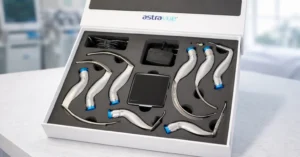
Video laryngoscopy is now widely regarded as a standard airway management tool across emergency medicine, anesthesia, and prehospital care. Its advantages over direct laryngoscopy are well established, particularly in improving first pass success and supporting providers with varying levels of airway experience. Despite this clinical maturity, adoption has not been driven by performance alone. Video laryngoscope price, system cost, and operational suitability continue to play a decisive role in purchasing decisions across global healthcare markets.
For hospitals, distributors, and procurement teams, evaluating video laryngoscopy costs increasingly requires a broader market perspective. Decisions are shaped by factors such as reusable versus disposable configurations, monitor design, battery performance, durability, and ease of deployment. These considerations are especially relevant when assessing affordable video laryngoscope options for facilities operating under budget constraints or variable infrastructure conditions.
A recent peer-reviewed market analysis published in Military Medicine provides a structured overview of how commercially available video laryngoscopy systems are positioned across different pricing tiers and use contexts. Rather than ranking devices or comparing clinical performance claims, the analysis focuses on pricing, system architecture, and practical design characteristics across a wide range of manufacturers and device categories.
This article draws on that analysis to examine broader market patterns in video laryngoscopy, with a particular focus on cost structure, design tradeoffs, and what these trends mean for buyers, distributors, and manufacturers operating in diverse clinical environments.
Scope and methodology of the market analysis
The referenced analysis reviewed multiple video laryngoscope systems available within defined price thresholds at the time of publication. Pricing data were obtained from publicly available sources, distributor listings, and direct quotations from manufacturers when required. Devices were grouped and discussed based on system architecture rather than brand preference.
The authors focused on characteristics including monitor type, blade reusability, power source, battery life, modularity, construction materials, and quoted or retail pricing. Importantly, the study did not attempt to normalize total cost of ownership or lifecycle costs across systems. Instead, it presented reported prices to illustrate how cost varies by design approach and intended use.
Both reusable and disposable systems were included, along with devices featuring integrated monitors and those designed for use with external displays. This methodology allows pricing to be interpreted within specific categories rather than as a single ranked comparison across all brands.
Video laryngoscope pricing tiers and system design
One of the clearest outcomes of the analysis is the existence of distinct pricing tiers within the video laryngoscope market. These tiers correspond closely with differences in system architecture and intended clinical setting.
Systems with external monitors are typically positioned at higher price points, reflecting modularity, larger display sizes, and compatibility with existing imaging infrastructure. These systems are often designed for fixed clinical environments where space, power availability, and integration flexibility are priorities.
Integrated monitor systems occupy a broad mid-range, balancing portability with self-contained operation. These devices are commonly used in emergency departments, transport scenarios, and facilities seeking a balance between cost and usability.
At the lower end of the price spectrum, disposable and simplified systems emphasize affordability, sterility, and minimal infrastructure requirements. The analysis highlights that affordability is achieved through varied design strategies rather than through a single dominant approach.
Disposable versus reusable video laryngoscope designs
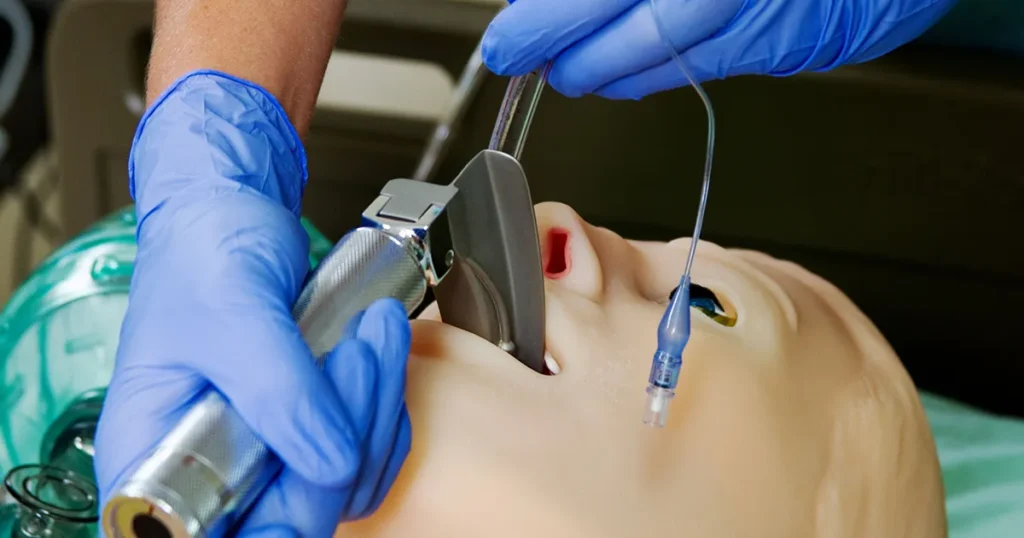
A central theme in the analysis is the ongoing tradeoff between disposable and reusable video laryngoscope systems. Reusable systems may offer lower long-term per-use costs in controlled environments where cleaning and reprocessing workflows are well established. However, they introduce operational requirements related to tracking, maintenance, and infection control.
Disposable systems reduce reprocessing needs and minimize cross-contamination risk, making them attractive in emergency, transport, and low infrastructure settings. These benefits must be weighed against recurring consumable costs and supply chain considerations.
The study reinforces that neither approach is universally superior. Instead, the appropriate choice depends on clinical volume, staffing, infrastructure, and budget structure.
Brands and reported pricing examples cited in the analysis
The peer-reviewed analysis explicitly references multiple manufacturers and reports approximate retail or quoted pricing for specific systems at the time of review. These examples are presented to illustrate market cost structure within defined categories rather than to establish a universal ranking.
Examples cited by the authors include:
- The Karl Storz C MAC reusable HD imager and blade, reported in the range of USD 4,512 to 4,988, with the C MAC Portable Monitor quoted separately at USD 4,210.90
- The Verathon GlideScope Go system, reported at approximately USD 5,000
- The Medtronic McGrath MAC video laryngoscope system, reported at approximately USD 7,000, with disposable blades priced at approximately USD 12 per unit
- The Heine Vision Pro system, reported at approximately USD 3,325
The authors note that these figures reflect published prices or quoted costs available at the time of analysis. They are intended to demonstrate how pricing varies across system types and configurations, not to represent current pricing or total cost of ownership comparisons
Design tradeoffs influencing real-world adoption
Across all categories, the analysis emphasizes that video laryngoscope selection involves balancing tradeoffs rather than identifying a single optimal solution. Larger external monitors provide enhanced visualization but require additional setup and power availability. Integrated monitors favor mobility and rapid deployment at the expense of screen size.
Battery life, construction materials, and enclosure design influence suitability for extended use and field environments. While formal environmental testing data are not uniformly available, the study notes that building materials and system design offer insight into expected durability.
These considerations are particularly important for non-hospital settings, where equipment must perform reliably outside controlled clinical environments.
Implications for hospitals, distributors, and export markets
For hospitals, the findings highlight the importance of aligning system selection with actual clinical workflows rather than defaulting to premium configurations. Facilities with stable infrastructure may benefit from modular systems, while emergency and outpatient settings may prioritize portability and simplicity.
For distributors and export-focused markets, the analysis reflects growing demand for adaptable and cost transparent solutions. International healthcare systems often operate across diverse infrastructure conditions, making flexibility and ease of deployment critical factors alongside price.
The study illustrates that value in the video laryngoscope market is increasingly defined by operational fit rather than by price alone.
Source
Market Analysis of Video Laryngoscopy Equipment for the Role 1 Setting. Military Medicine, 2023. Published by Oxford University Press. The full peer-reviewed study is publicly available through the journal’s official platform.

About AstraVue
AstraVue is a medical device manufacturer focused on video laryngoscopy solutions. In presenting this analysis, AstraVue’s objective is to accurately interpret peer-reviewed literature and provide a transparent overview of current market pricing structures, system design approaches, and manufacturer strategies as reported by independent sources. Readers are encouraged to evaluate all video laryngoscope systems, including AstraVue’s, based on clinical requirements, regulatory considerations, and operational needs.